What Is a 3D-Printed Orthopedic Implant? A Complete Guide
How additive manufacturing produces porous titanium hip, knee and spine implants, why trabecular structures improve osseointegration, and what it means for patients and surgeons.
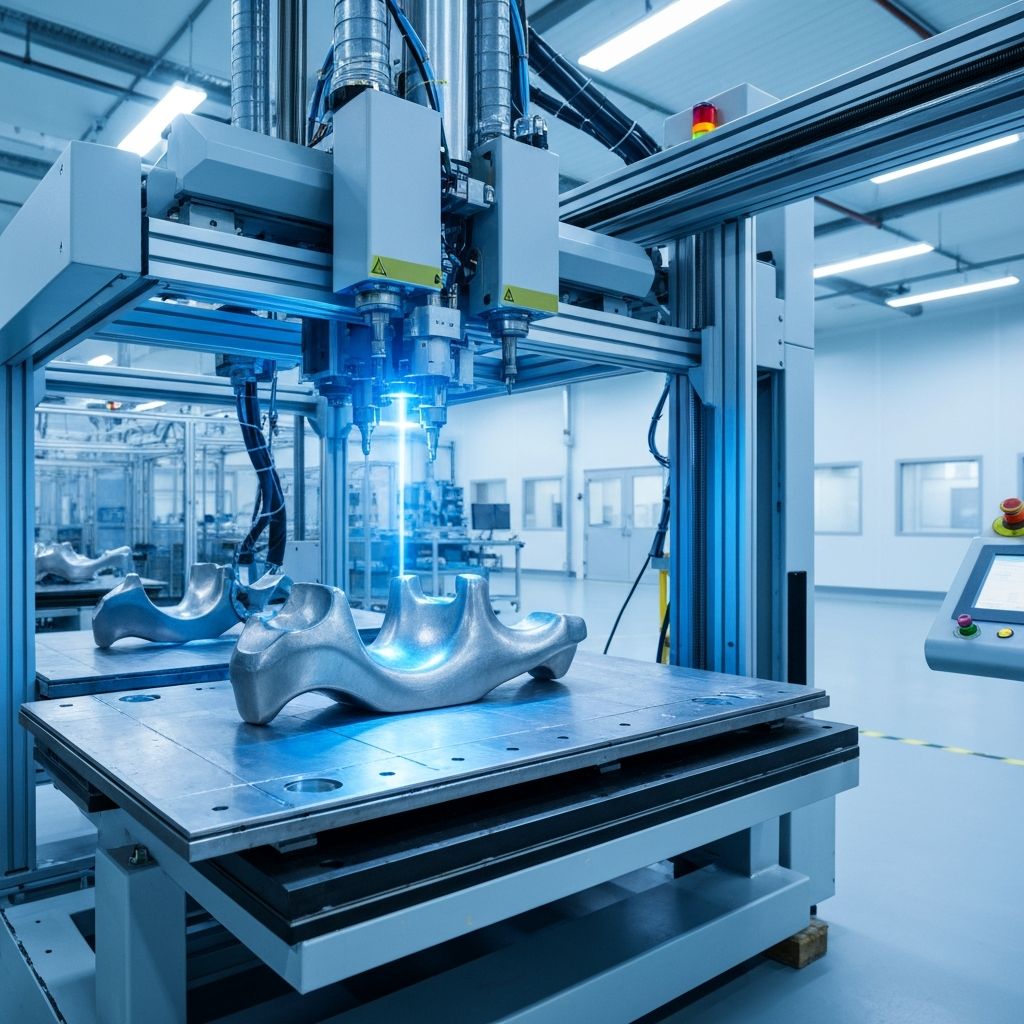
3D-printed orthopedic implants are joint-replacement and bone-reconstruction devices manufactured layer by layer from medical-grade titanium alloy powder using additive manufacturing — most commonly electron beam melting (EBM) or selective laser melting (SLM). Unlike traditional forging or casting, 3D printing can produce porous trabecular structures that closely mimic natural cancellous bone.
Why porosity matters
Natural bone is not solid. Its inner (cancellous) structure is a lattice of interconnected struts. When an implant surface replicates this geometry:
- Bone grows into the implant (osseointegration) rather than merely around it
- The elastic modulus of the porous layer is closer to that of bone, reducing stress shielding
- Long-term fixation can be achieved without bone cement in many indications
AK Medical's proprietary 3DACT™ (3D printing precision building technology) platform produces implants with an interconnected porous structure whose pore size and porosity are tuned to match human cancellous bone.
Where 3D-printed implants are used today
| Application | Example devices | Typical benefit |
|---|---|---|
| Hip replacement | Porous acetabular cups, augments | Cementless biological fixation |
| Spine surgery | Interbody fusion cages | Faster fusion, better endplate contact |
| Tumor reconstruction | Patient-matched prostheses | Restores segments standard implants cannot |
| Complex revision | Custom cages and cones | Fills severe bone defects |
A brief regulatory milestone
In 2015, the China National Medical Products Administration (NMPA, then CFDA) approved AK Medical's 3D-printed acetabular cup — the first 3D-printed orthopedic implant approved in China and among the earliest worldwide to reach mass clinical use. Since then, more than one million AK Medical implants have been used in over 40 countries.
What patients should know
3D printing does not change the fundamentals of joint replacement surgery: implant selection, surgical technique and rehabilitation still determine outcomes. What it changes is the fit — both the mechanical fit of porous surfaces against living bone, and the anatomical fit when implants are custom-built from a patient's CT data through platforms such as ICOS™ (Innovative Custom Orthopedic Solution).
If you are a surgeon or hospital interested in 3D-printed implant systems, contact our clinical team or browse the full product catalogue.